Challenge
Propose a design-led response that investigates a specific problem within the digital legacy space. Explore how design can make these systems more humane, accessible, ethical, or culturally responsive.
My Role
My role as one of the interactive designers was more focused on the backend of the project. I was responsible for creative coding and interaction development, as well as assisting with interface design.
DISCOVER
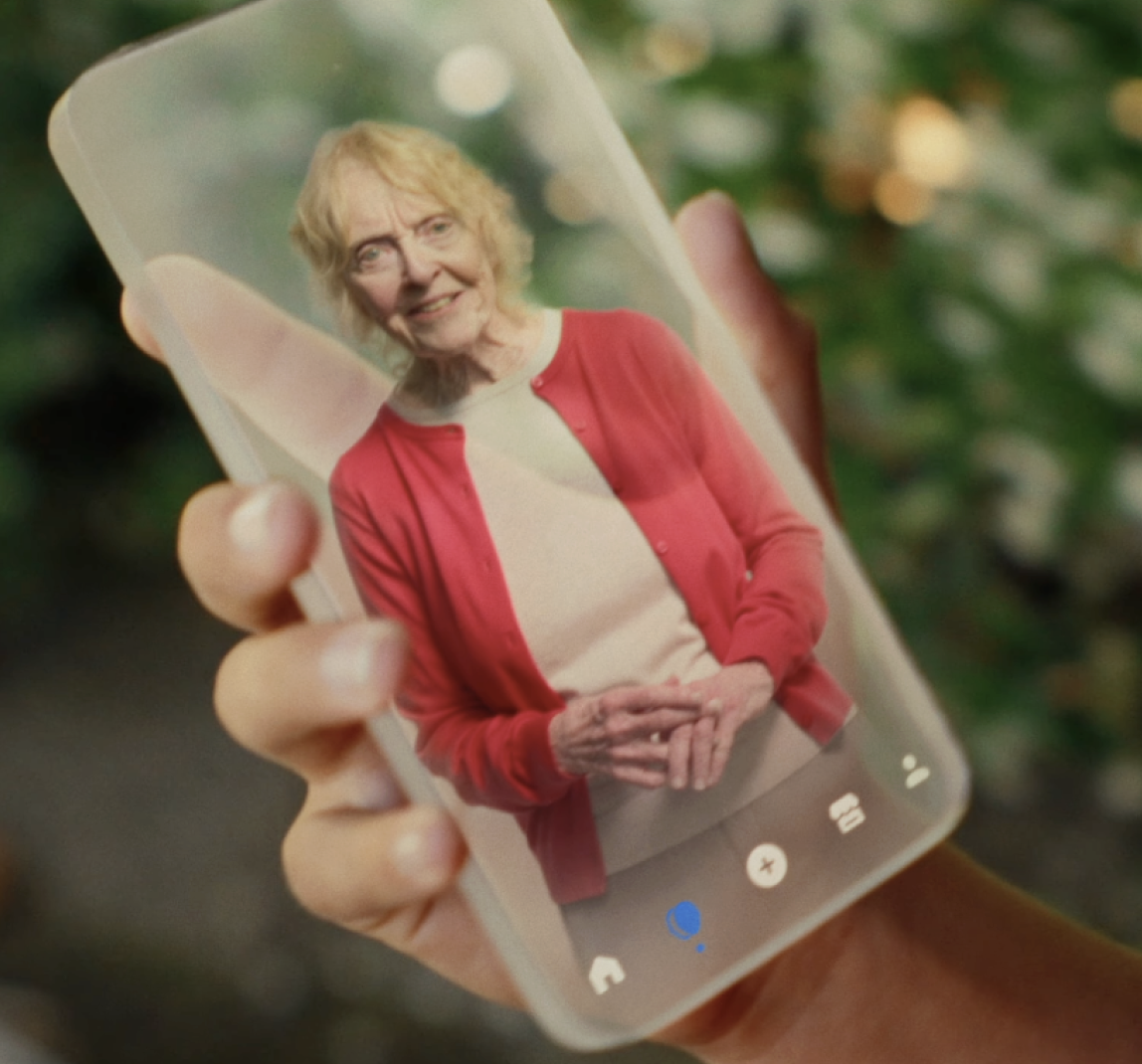
An AI’d grandma. We came across an ad for an app that allowed people to upload information about a deceased loved one so AI could recreate and memorialise them. The idea of a digital version of someone living on indefinitely felt unsettling, and that discomfort stayed with us as we explored the project further.
We noticed AI becoming more present in everyday apps like Google, Facebook, and Instagram. Looking at tools/apps like 2wai, which reconstruct and simulate human-like interactions from personal data, we started exploring an underlying discomfort in how AI interprets and reshapes information.
DEFINE
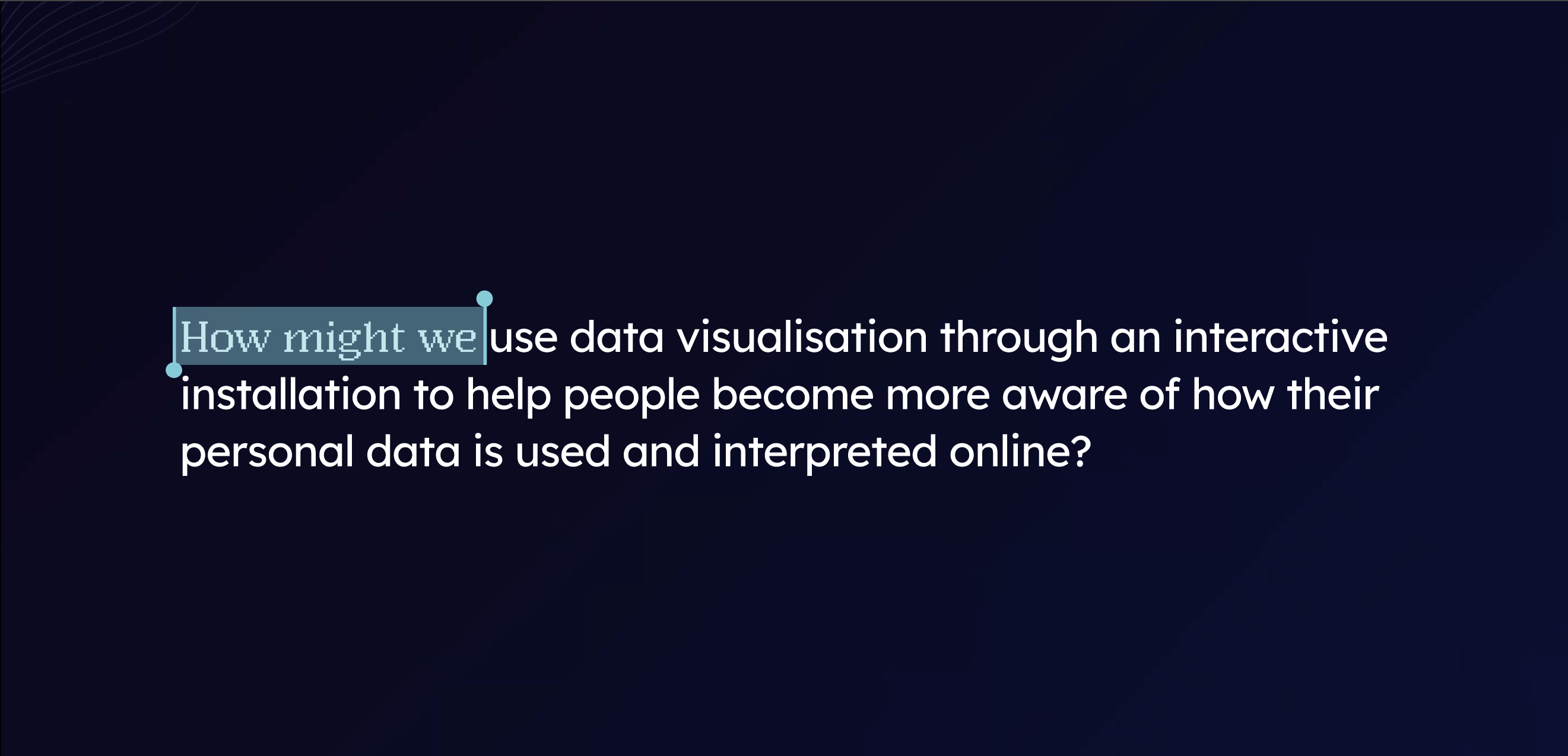
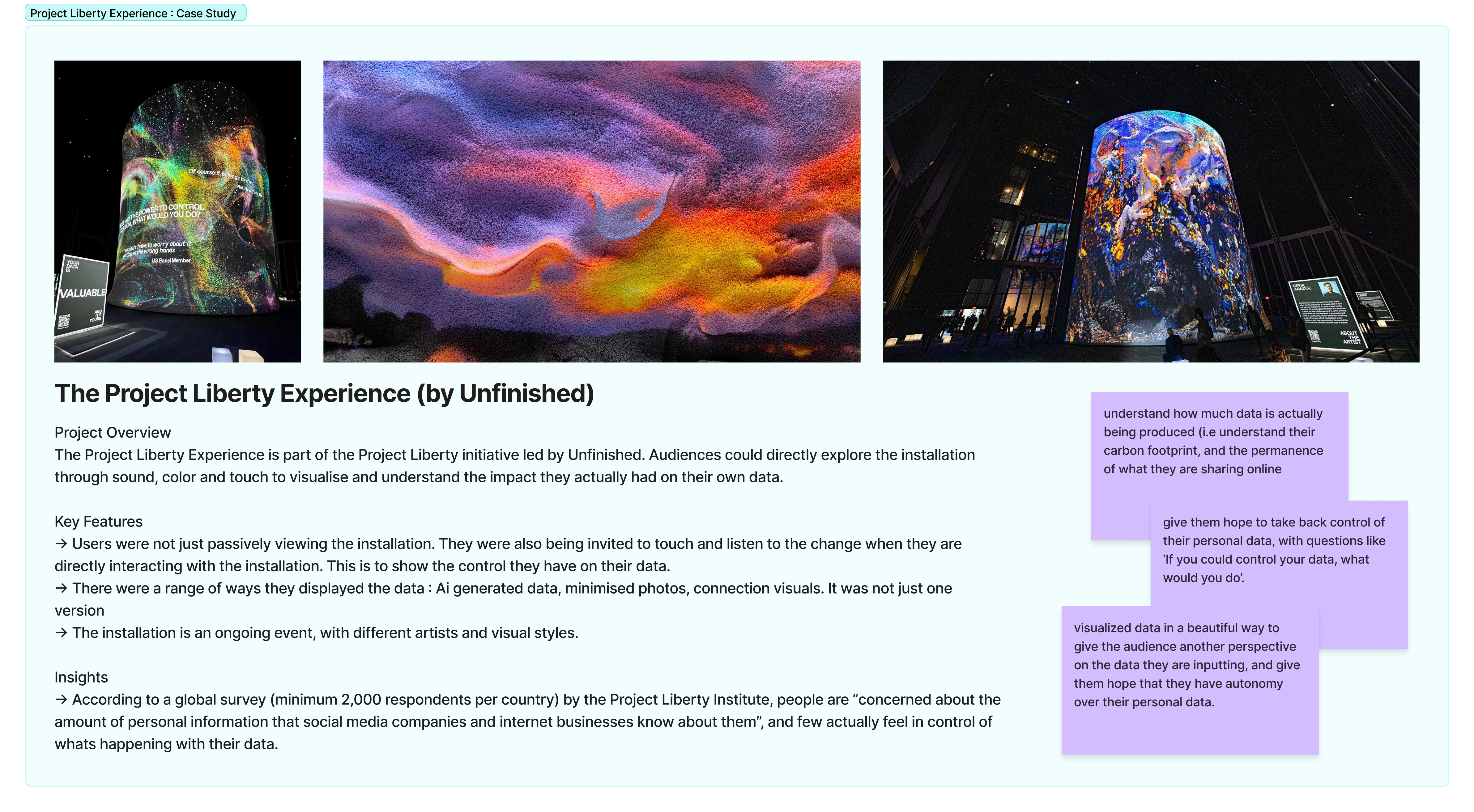
We took a lot of inspiration from this case study, taking what we learned and opportunities we could use. The wonder from this installation shaped our direction. We wanted people to feel curious enough to engage, rather than overwhelmed by the topic.
The choice to use the fish metaphor was made to attract attention without outright scaring or overwhelming our audience on the subject of online data, so instead we aim to bring in attention with a visually engaging aquatic theme, to make it easier to understand.
CLARIFY
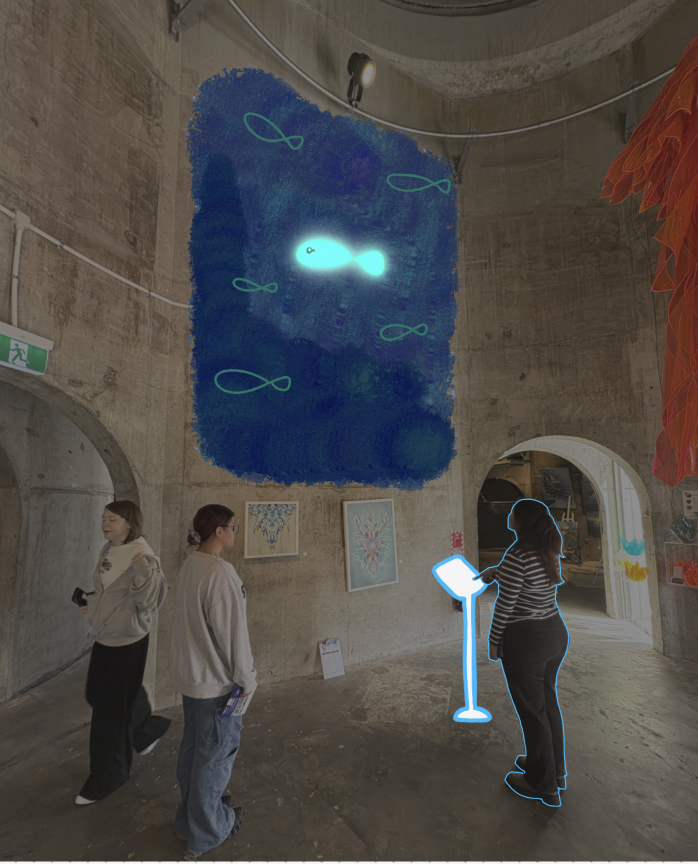
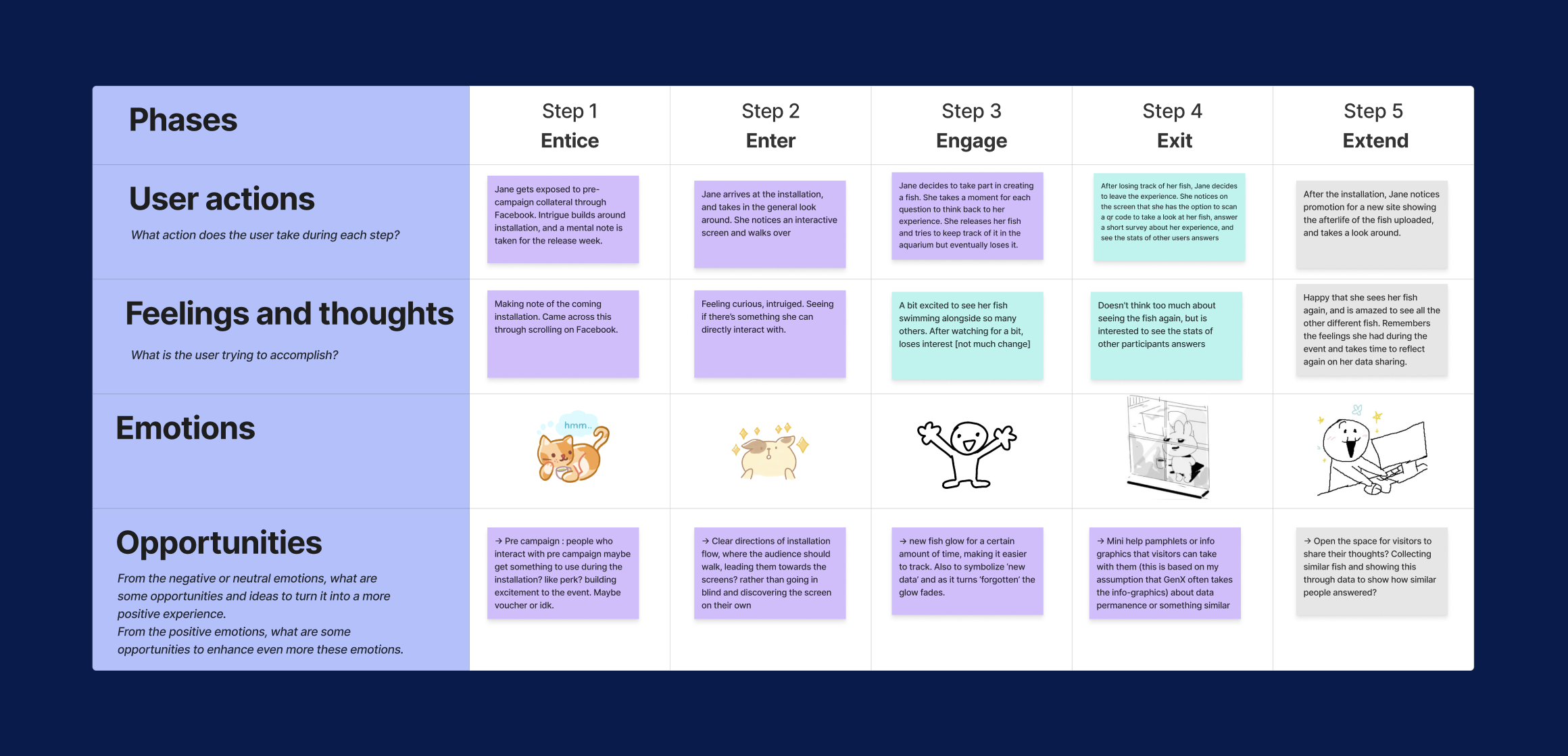
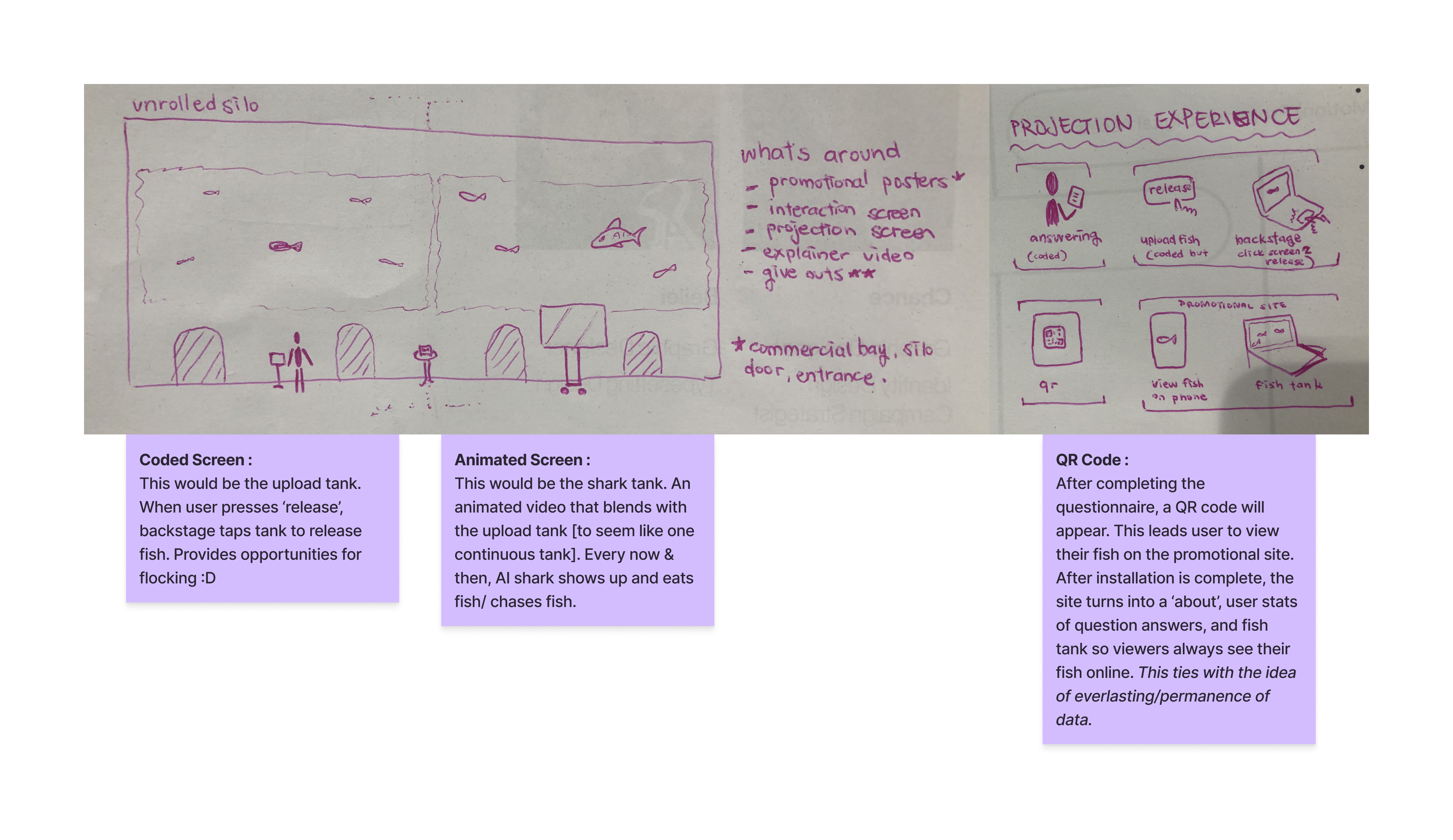
Our other interactive designer, Mhayvine, worked on developing the experience and campaign/installation touchpoints.
CONCEPTUALISE
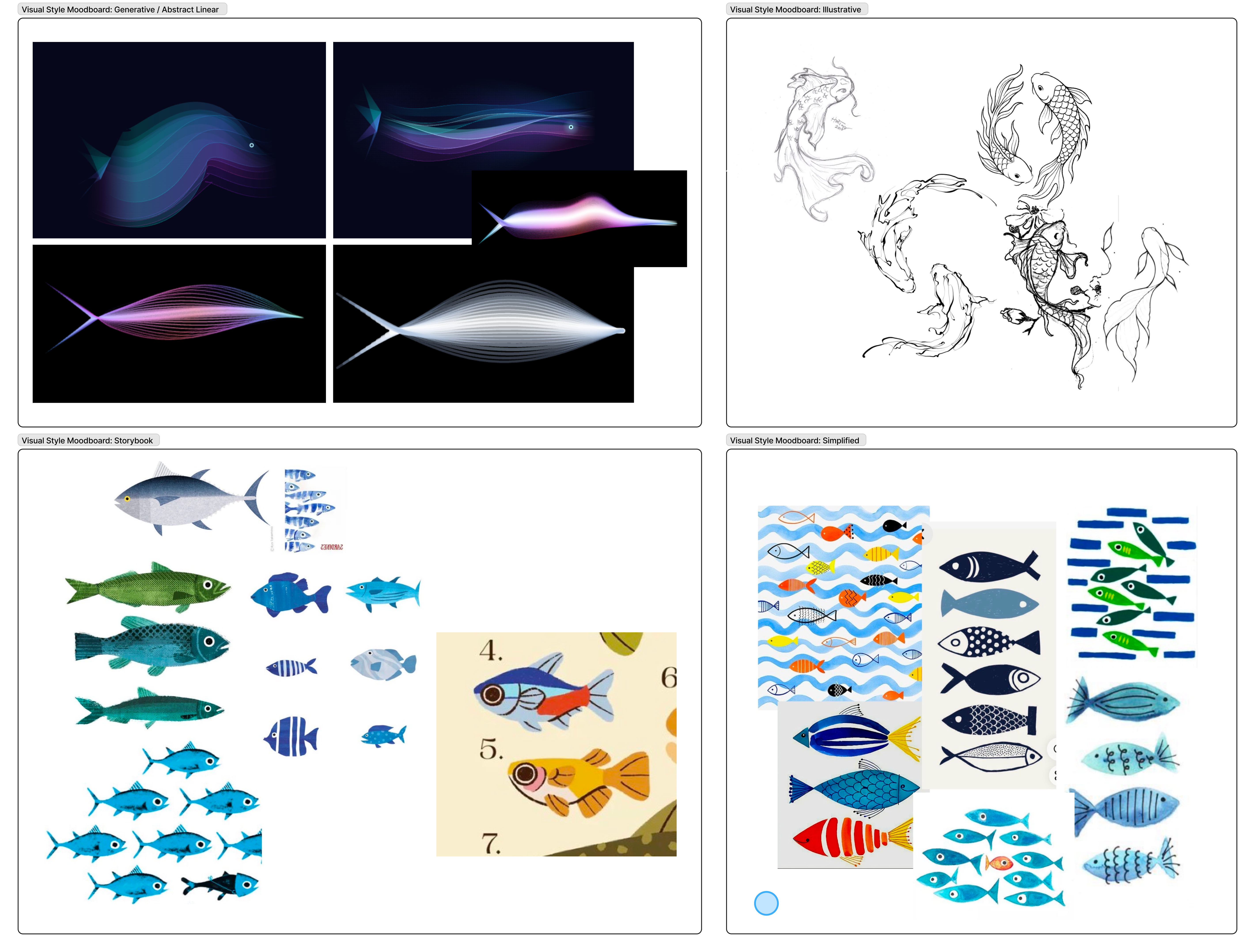
Initially, we went with a pixel style for the fish, but felt that this direction felt too childish.
We explored other visual styles, running a vote and asking participants to compare options, and landed on generative/abstract. Participants said it felt futuristic, eye-catching, and more reflective of data as a dynamic, evolving system compared to more literal or pixel-based styles.
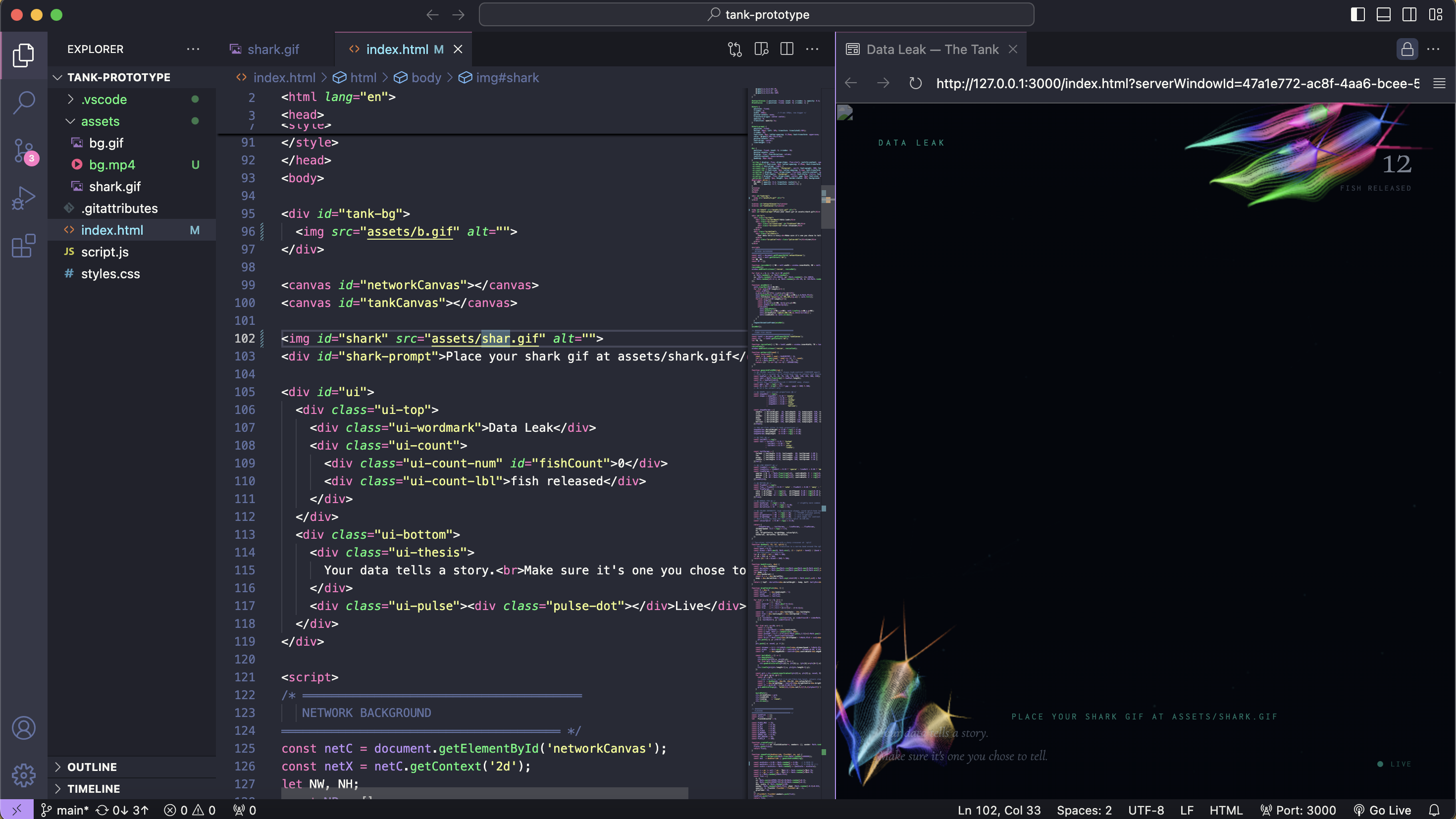
I experimented with creative code using p5.js to develop the look and behaviours of the fish when spawned in the tank. This is where I continued to explore the abstract, generative style and play around more with the customisation easier, to make each fish look different.
Working closely with Mhayvine, we developed the general flow of the questionnaire and the UI.
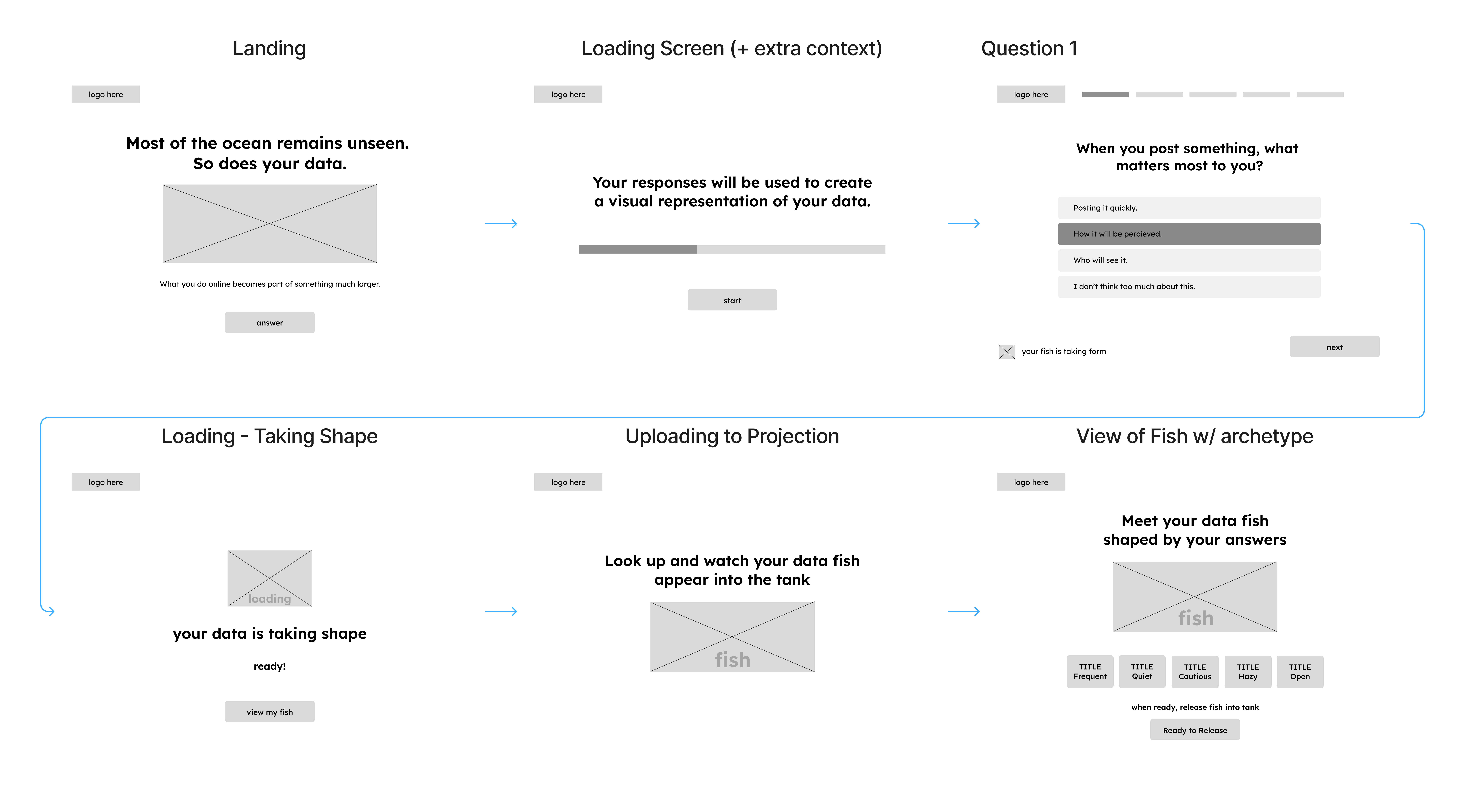
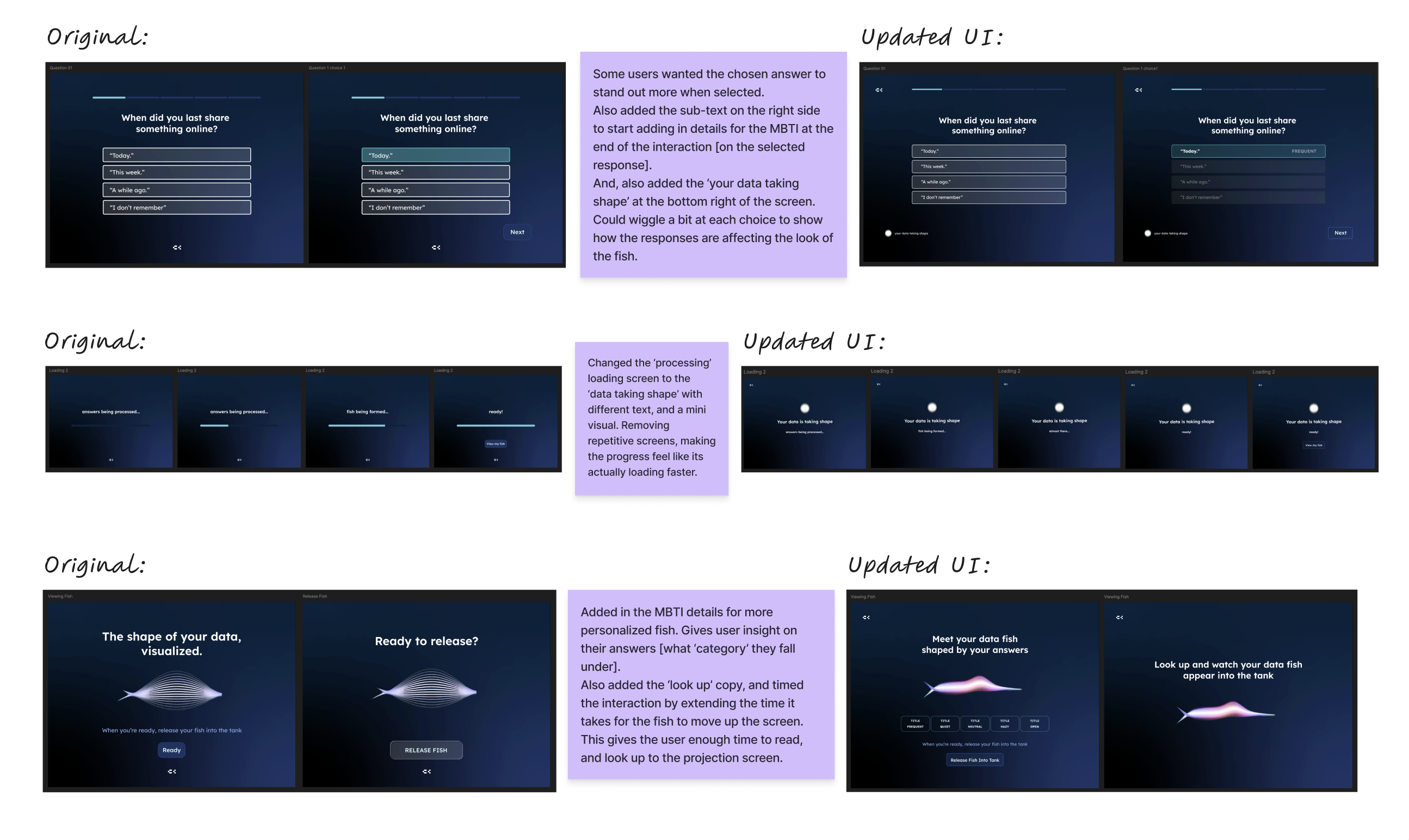
Iterative testing and making changes of screens
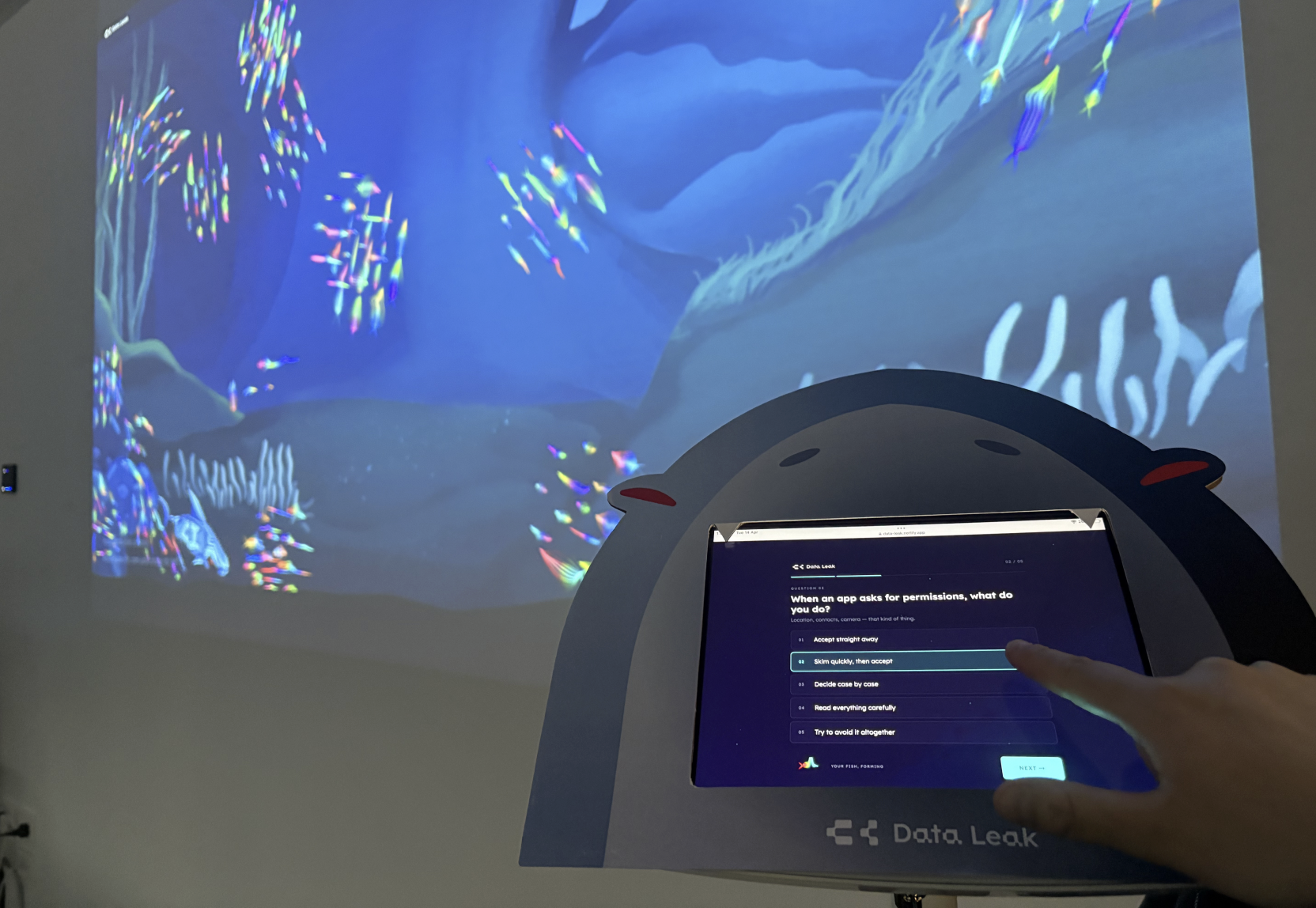
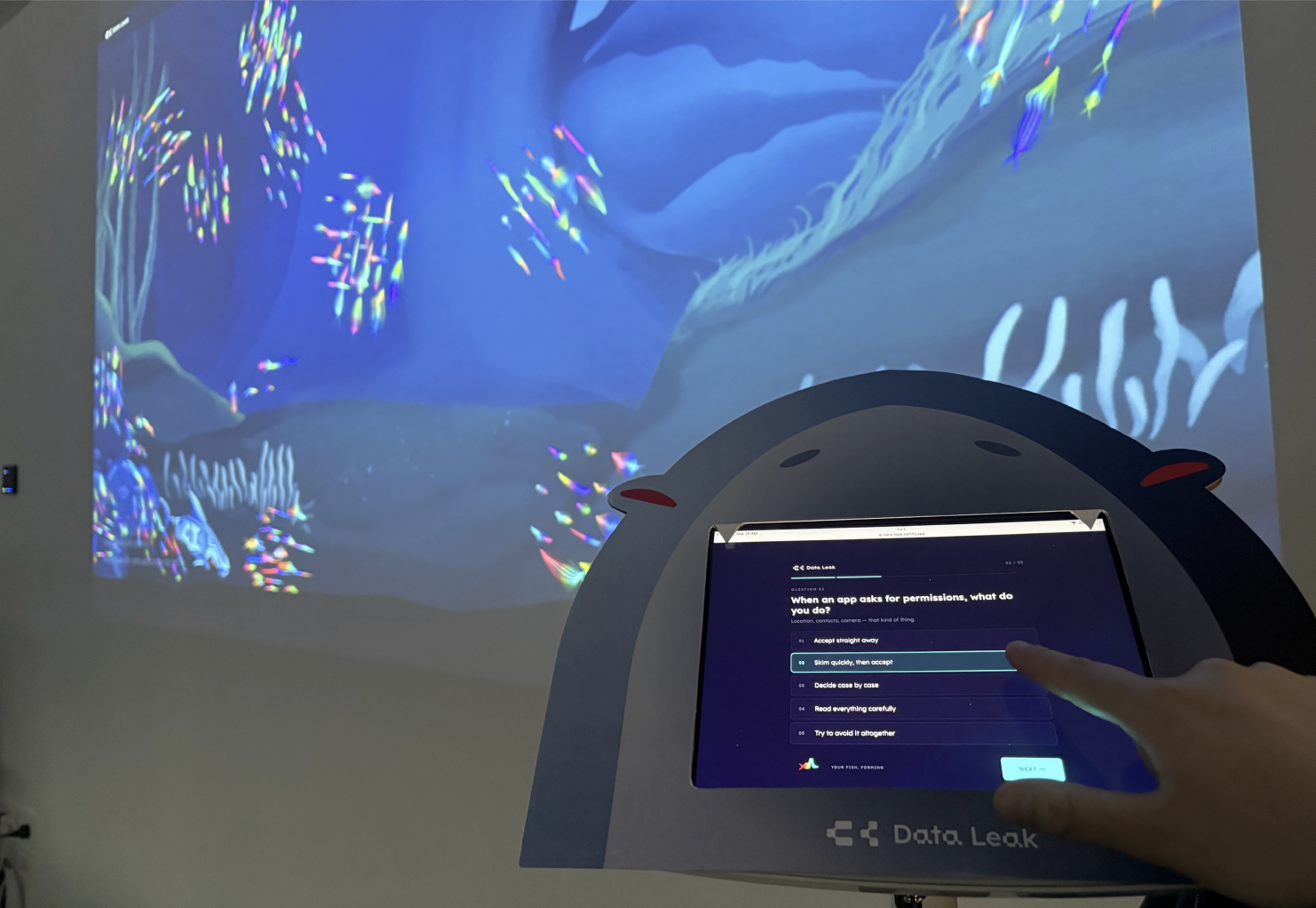
We simulated the installation by projecting the tank and flow of the experience from a user standpoint.
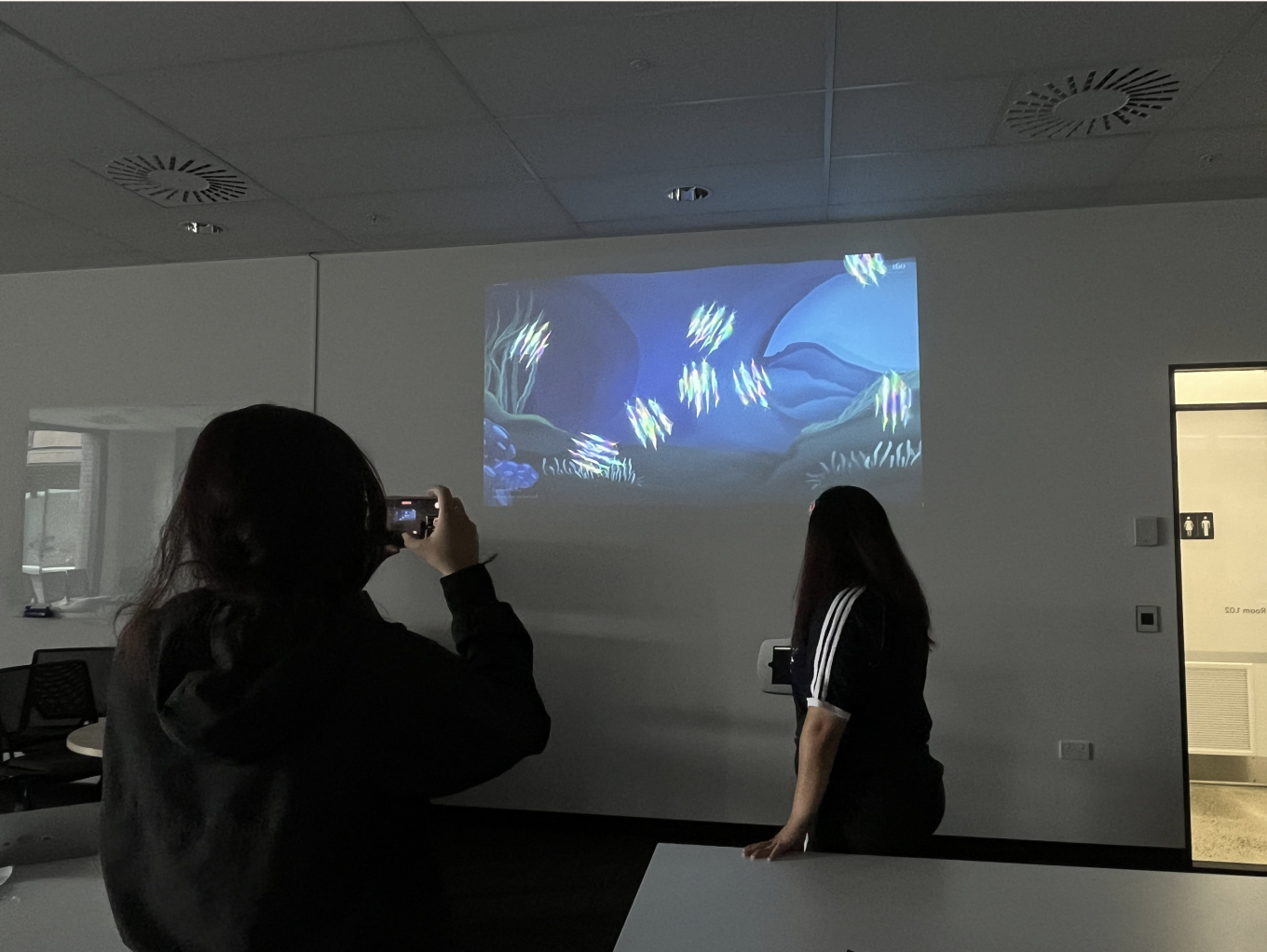
Technical testing the interaction
3D mockup in-situ in Silo Park
OUTCOME
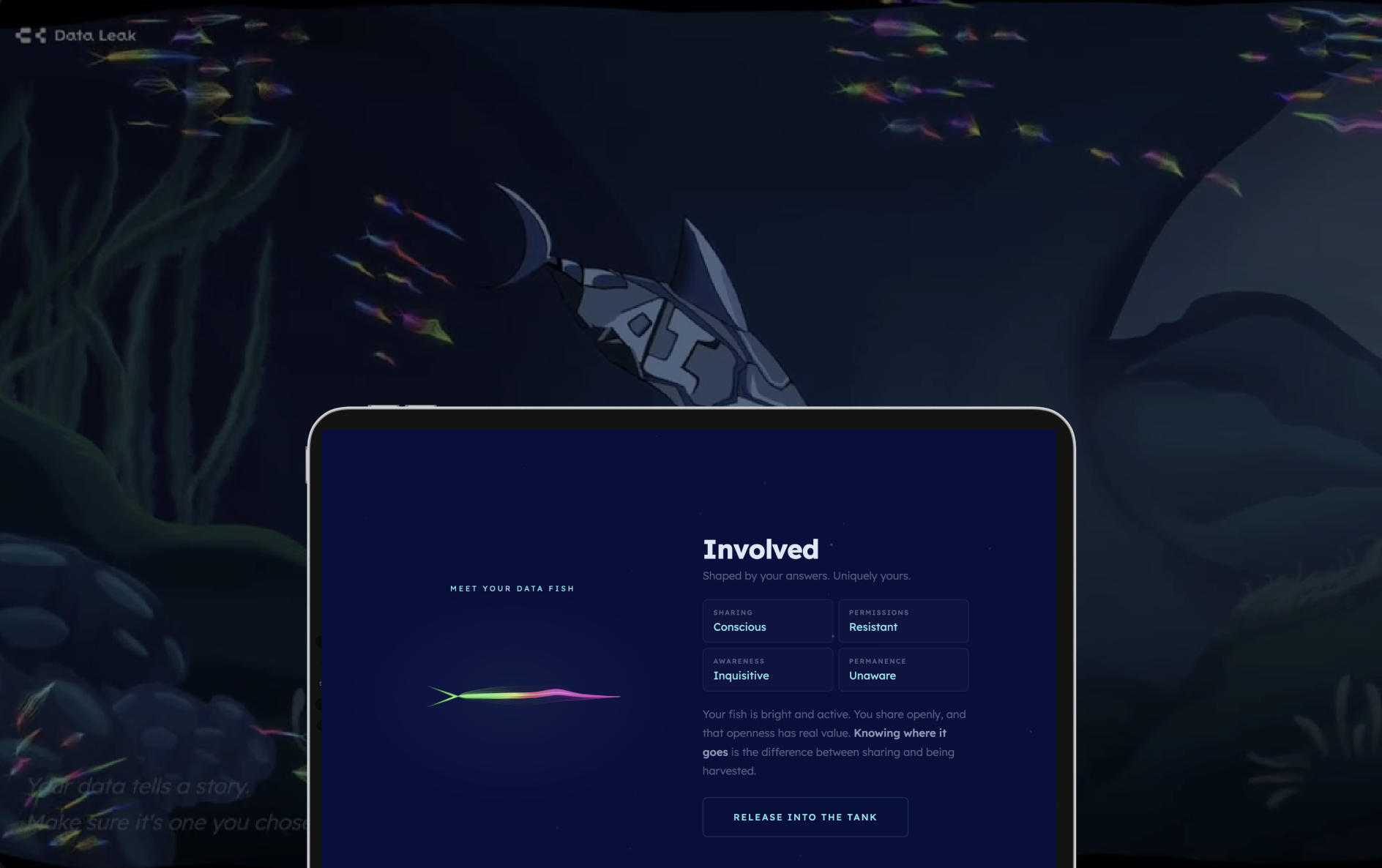
Throughout development, I created the fish and questionnaire interactions, and coded the experience so it all worked seamlessly together.
Try the prototype ↗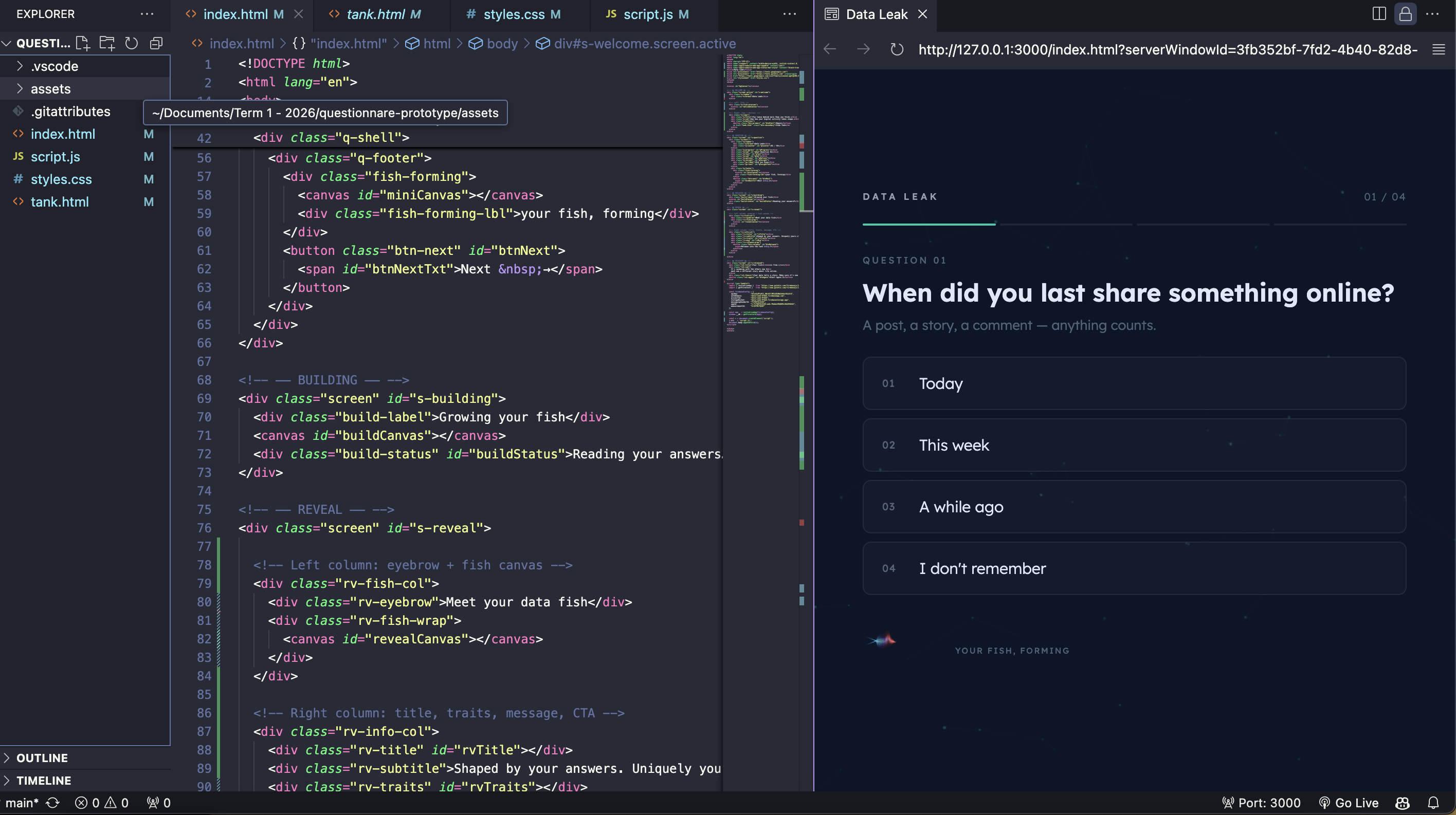
Coding the questionnaire
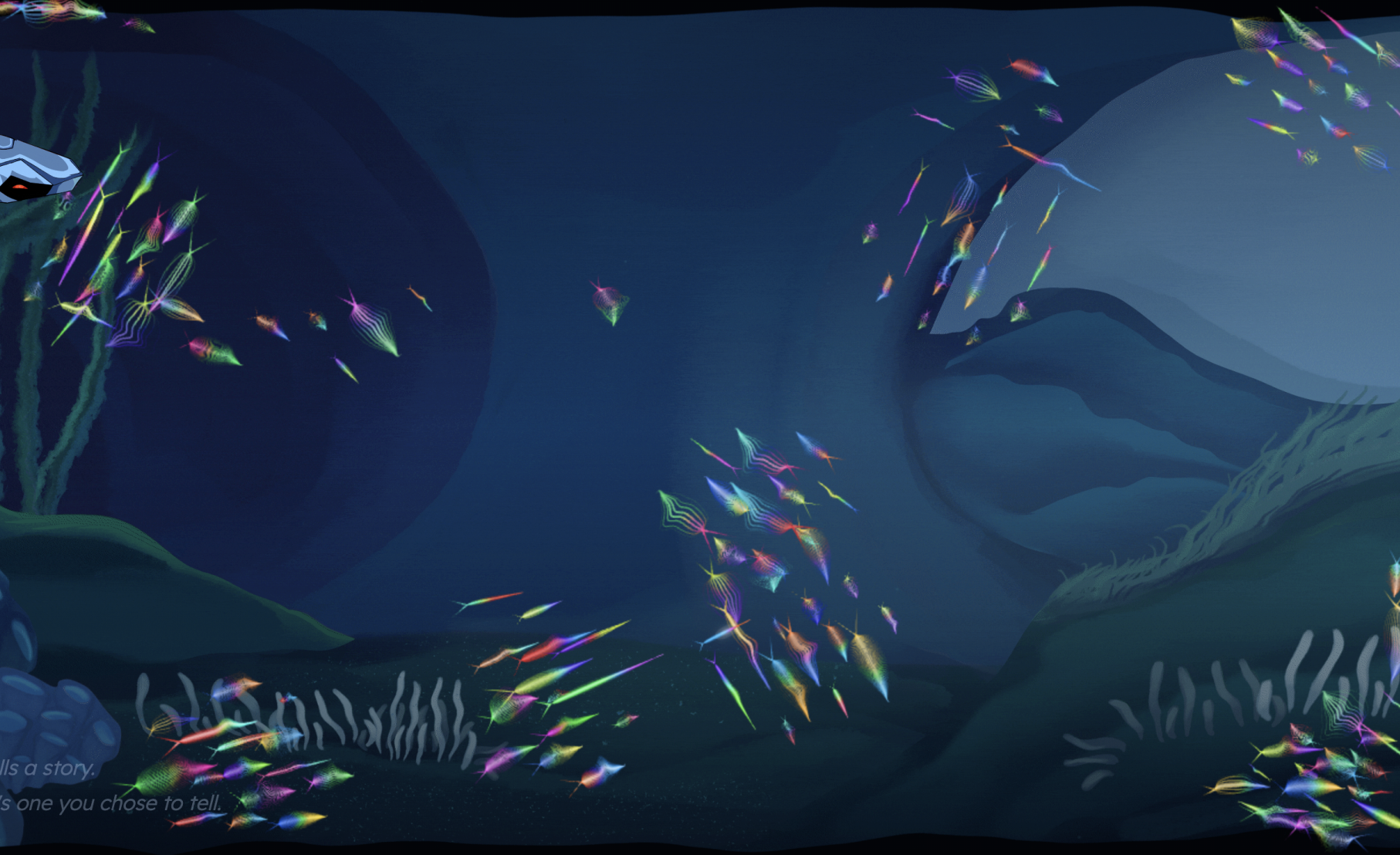
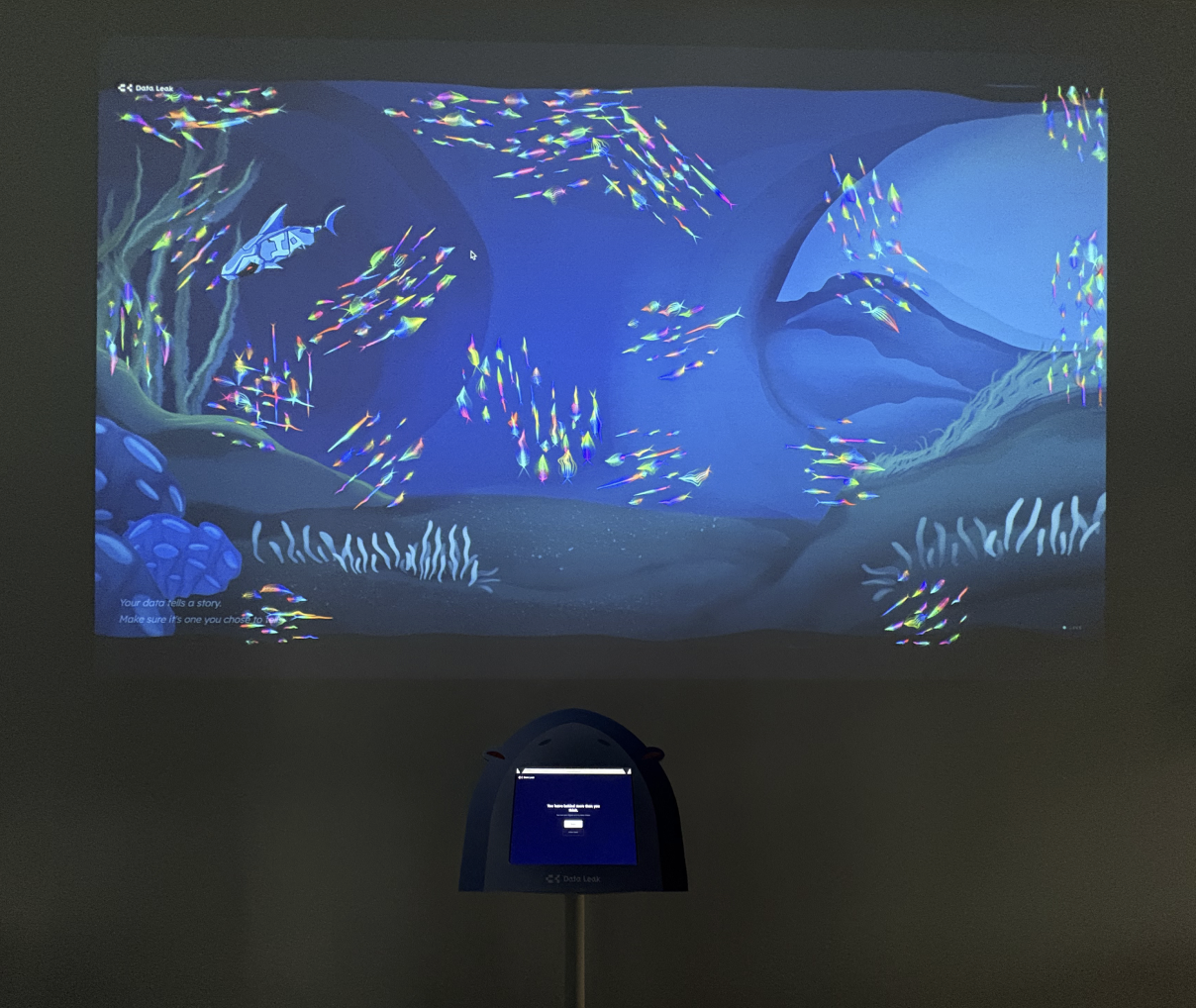
Applying the environment created by our motion designer, Loveday Tan, to the tank
We also took photos in a smaller scale to see how it would look in real life.
REFLECTION
With a more technical role in this project, I feel like I developed a stronger understanding of coding. Especially working with p5.js to make something delightful. Using AI as a tool also helped me experiment faster and explore different approaches and iterations, rather than getting stuck in one method/style. Overall, the project strengthened my confidence in combining technical implementation with design thinking.
SEE NEXT